After visiting the courthouses in Bedford County, Virginia and in Campbell County, Virginia, I have realized the enormous importance that courthouse records can have to a researcher, and particularly to historic preservationists. Courthouse records contain a wealth of relevant information. However, one does have to know how to search the records, as trying to find information in the thousands of records that a courthouse holds can be rather overwhelming.
Research on a property is one of the most important steps in historic preservation. There are many resources to help preservationists begin their research, such as the publication How to Research Your Historic Virginia Property from the Virginia DHR. Yet often when people are researching, they tend to overlook courthouse records. Courthouses contain records of property deeds, wills, chancery court records, and more. Many courthouses will often hold all of the records of their particular county from the time that the county began, as long as there have been no fires or other types of destruction at the courthouse. The Bedford County Courthouse has records dating all the way back to 1754, including some documents signed by Thomas Jefferson.
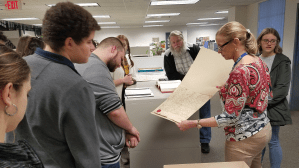
Researchers can use all of these types of records to find information about people and properties. For instance, all of the transfers of the deed to Mead’s Tavern in New London, Virginia can be found in the Campbell County Courthouse. The transfers of the deed to the Bedford Alum Springs hotel can be found as well. Researchers would like to know the extent of the property at a particular time, the buildings that were on the property at that time, the worth and the function of those buildings, any additions that were made to the buildings, and, of course, who owned and who used them. Much of this information can be found in deeds and wills. Chancery court records can provide other information on the owner and others who were involved with the property and can show whether or not there were any disputes having to do with the property.
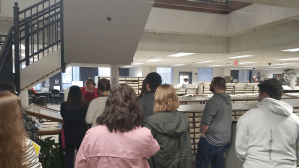
Though these sources can be organized differently in different courthouses, the organization is often fairly similar. Both the Bedford County and the Campbell County courthouses have deed index books, which organize deeds either by the name of the grantor or the name of the grantee and the year that the deed changed hands. Furthermore, if one knows the current owner of a particular property, it is possible to trace the transfer of the deed of the property back to its original owner. Also, many courthouse records have been put online, and most courthouses have computers for people to use. In Historic Preservation: An Introduction to its History, Principles, and Practice, Norman and Ilene Tyler and Ted Ligibel state, “Digital technologies have had a profound influence on historic preservation over the past two decades.”1 Technology can make research much faster and more efficient.
When researching a historic property, courthouse records can provide essential information that cannot be found anywhere else. They contain primary sources that can prove invaluable to historic research, and these records should not be overlooked or dismissed. Courthouse research can help provide historic preservationists with the ability to piece together the events of the past and to thus give us a clearer picture of our past.
1 Tyler, Norman, Ilene R. Tyler, and Ted J. Ligibel. Historic Preservation: An Introduction to its History, Principles, and Practice. (New York, NY: W.W. Norton and Company, Inc., 2018), 226.
 Haley Fury